
.png)

How to Use Chlorine Tablets Safely & Effectively in Your NZ Pool
Staring at a container of chlorine tablets and wondering if you’re using the right amount is a common concern for many Kiwi pool owners. Get it wrong, and you risk not only cloudy water but also potential damage to your pool’s liner and expensive equipment. The goal is a pristine, safe swimming environment, but the confusion around chemical handling can feel overwhelming and take the joy out of owning your backyard water playground.
This comprehensive guide is here to restore your confidence. We’ll provide clear, expert advice on how to use chlorine tablets safely and effectively in your New Zealand pool. You will learn how to calculate the correct dosage for your pool size, understand the crucial safety steps for handling and storage, and protect your valuable investment. Master your weekly maintenance and get ready to spend less time worrying about chemicals and more time enjoying crystal-clear water.
Key Takeaways
- Prioritise Safety First: Understand the crucial rules for handling and storing concentrated chlorine to protect yourself, your family, and your pool equipment.
- Maintain the Ideal Chlorine Level: Learn the correct method for using chlorine tablets to consistently achieve a Free Chlorine level of 1-3 ppm for a healthy, sparkling pool.
- Avoid Common, Costly Mistakes: Discover why placing tablets directly in your skimmer or pool can cause expensive damage and what the right application methods are.
- Explore Automated Solutions: Manual dosing isn't your only choice. Learn about modern alternatives available to Kiwi pool owners that offer superior water quality with far less effort.
Table of Contents
- Understanding Chlorine Tablets: The Basics for Kiwi Pool Owners
- Essential Safety: How to Handle and Store Chlorine Tablets
- A Step-by-Step Guide to Using Chlorine Tablets Correctly
- Common Mistakes to Avoid (And How to Protect Your Pool)
- The Modern Alternative: Beyond Manual Chemical Dosing
Understanding Chlorine Tablets: The Basics for Kiwi Pool Owners
For many Kiwi pool owners, keeping their water playgrounds sparkling clean and safe is a top priority. Chlorine tablets are one of the most popular and effective tools for the job. At their core, these are compressed, slow-dissolving pucks of concentrated chlorine designed to provide steady, hands-off sanitation. Unlike granular shock treatments that deliver a quick, powerful dose, a single tablet can consistently sanitise your pool water over several days, making it a convenient and reliable choice for routine maintenance.
The primary active ingredient in most of these tablets is Trichloroisocyanuric acid, often called 'Trichlor'. This powerful compound is a cornerstone of modern swimming pool sanitation, trusted by professionals and homeowners alike for its efficiency and stability. Understanding the different types available is the first step to using them correctly.
Stabilised vs. Unstabilised Tablets: The Role of Cyanuric Acid (CYA)
The vast majority of chlorine tablets sold in New Zealand are 'stabilised'. This means they contain Cyanuric Acid (CYA), which acts like a sunscreen for your chlorine, protecting it from being rapidly broken down by the sun's harsh UV rays. This makes your chlorine last significantly longer. However, it's important to monitor CYA levels, as too much can build up over time and lead to 'chlorine lock', where the chlorine becomes less effective. Unstabilised options, like Calcium Hypochlorite, are rarely found in tablet form and are better suited for indoor pools or as a shock treatment.
Multi-Action vs. Standard Tablets: What's the Difference?
When you shop for tablets, you'll see standard and 'multi-action' (or '5-in-1') varieties. Standard tablets contain only Trichlor for sanitation. Multi-action tablets are an all-in-one solution, including additives like an algaecide to prevent green water, a clarifier to keep water sparkling, a stain inhibitor, and a flocculant to help the filter capture fine particles. These can be a convenient choice for proactive, simplified pool care.
Pros and Cons of Using Chlorine Tablets
Like any pool care product, tablets come with their own set of advantages and considerations.
- Pros: They are easy to handle and store, provide a slow and consistent release of chlorine for stable sanitation, and are generally a cost-effective method for daily chlorination.
- Cons: Trichlor is acidic and can gradually lower your pool's pH and total alkalinity, requiring regular testing and balancing. As mentioned, they contribute to CYA buildup over time. They also require safe manual handling and can damage pool equipment like pumps or liners if used incorrectly (e.g., placed directly in a skimmer basket).
Essential Safety: How to Handle and Store Chlorine Tablets
While highly effective, it’s crucial to remember that chlorine tablets are concentrated chemicals that demand respect. Your first and most important step, before you even open the container, is to read and understand the manufacturer's label. This provides specific instructions for your product. Always ensure these chemicals are stored securely, well out of reach of children and pets, to keep your family and your water playground safe. Following a few key principles-protect yourself, store correctly, and never mix-will ensure safe and efficient pool care.
Personal Protective Equipment (PPE) is Non-Negotiable
Handling these chemicals safely starts with protecting yourself. Direct contact can cause skin and eye irritation or burns, and inhaling fumes can be harmful. Before handling any pool chemicals, make sure you are properly equipped:
- Chemical-resistant gloves: To protect your hands from direct contact and potential chemical burns.
- Safety goggles or glasses: To shield your eyes from splashes or fine dust from the tablets.
- A well-ventilated area: Always handle chemicals outdoors or in a space with excellent airflow to avoid inhaling concentrated fumes.
Correct Storage to Maintain Potency and Prevent Accidents
Proper storage not only preserves the effectiveness of your chemicals but is also a critical safety measure. An unsecured or improperly stored container can lead to dangerous situations. For trusted results, always follow these storage guidelines:
- Store in a cool, dry, and well-ventilated location, away from direct sunlight which can degrade the product.
- Keep them in their original, tightly sealed container to prevent moisture contamination and spills.
- Crucially, never store them near other chemicals, especially acids, petrol, or any liquids, to avoid hazardous reactions.
The Golden Rule: Never, Ever Mix Chemicals
This is the most important rule in pool chemical safety. Mixing different chemicals, even those that seem similar, can create a violent reaction, release toxic chlorine gas, or cause a fire. For example, never mix Trichlor tablets with Calcium Hypochlorite (Cal-Hypo), a common granular shock. The combination is extremely volatile. To prevent cross-contamination, always use a clean, dry, and dedicated scoop for each chemical you handle. Your safety depends on it.
A Step-by-Step Guide to Using Chlorine Tablets Correctly
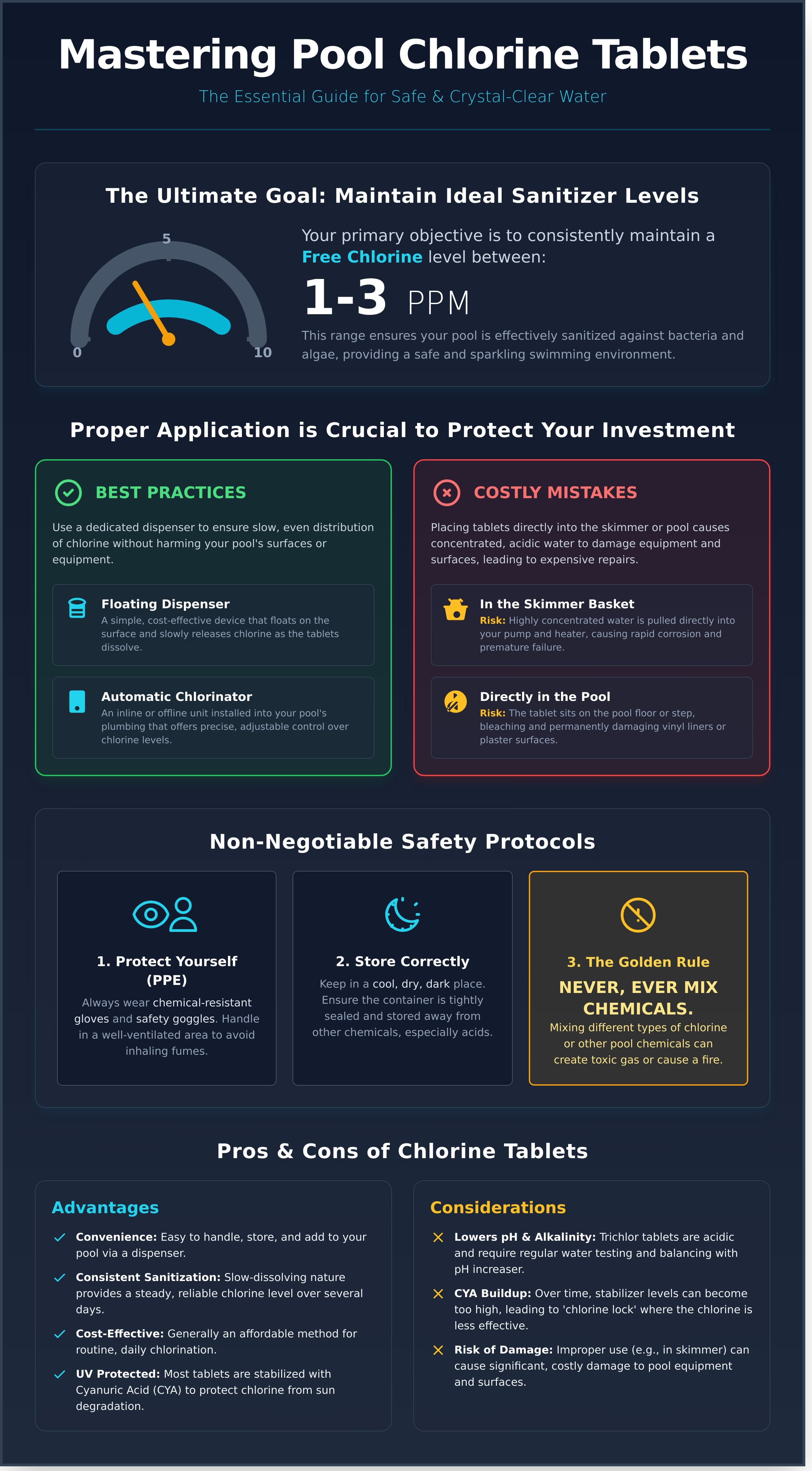
Using chlorine tablets effectively is about achieving consistency. The goal is to maintain a stable Free Chlorine level between 1-3 parts per million (ppm) to ensure your water is always sanitised and safe for swimmers. Following a correct process not only keeps your family healthy but also protects your pool's surfaces and equipment from damage.
Crucial Warning: Never throw chlorine tablets directly into your pool. They are highly acidic and will sink to the bottom, bleaching and permanently damaging vinyl liners or plaster surfaces.
Step 1: Test and Balance Your Pool Water
Before adding any sanitiser, you must ensure your water chemistry is correctly balanced. Unbalanced water can render chlorine ineffective. Use a reliable test kit to check three key levels:
- pH: Aim for 7.2 - 7.6. If the pH is too high, chlorine's sanitising power is drastically reduced.
- Total Alkalinity: Keep this between 80 - 120 ppm. It acts as a buffer to prevent wild swings in your pH level.
- Cyanuric Acid (CYA): Maintain a level of 30 - 50 ppm. CYA acts as a stabiliser, protecting chlorine from being destroyed by the sun's UV rays.
Adjust these levels first to create the perfect environment for your chlorine to work efficiently.
Step 2: Determine the Right Number of Tablets
A general rule for many Kiwi pools is to use one 200g tablet per 20,000-30,000 litres of water, per week. However, your pool’s chlorine demand can change based on several factors, including:
- Heavy bather load (more swimmers)
- Hot, sunny weather
- Heavy rainfall and debris
Always start with the dosage recommended on the product packaging. Test your water every few days and adjust the number of tablets as needed to keep your Free Chlorine in that ideal 1-3 ppm range.
Step 3: Choose the Correct Dispensing Method
How you introduce tablets to your water is critical for safety and effectiveness. There are three common methods, but only one is professionally recommended for optimal results.
- Floating Dispenser: A simple, low-cost device that floats around the pool dissolving tablets. Cons: It can get stuck in one spot (like a ladder or corner), potentially causing high concentrations of chlorine that can bleach liners.
- Automatic Chlorinator: This is the best and most reliable method. An in-line or off-line unit is plumbed directly into your system, allowing you to precisely control the rate at which tablets dissolve. It provides consistent, automated chlorination for your water playground.
- Skimmer Basket: While tempting for its convenience, placing tablets in your skimmer is highly discouraged. This practice forces super-concentrated, acidic water directly through your pump, filter, and heater, which can lead to premature corrosion and expensive equipment failure.
Common Mistakes to Avoid (And How to Protect Your Pool)
Using chlorine tablets effectively is about more than just keeping water sanitary; it's about protecting your significant investment. As trusted suppliers to Kiwi professionals and consumers, we have seen how a few simple missteps can lead to premature wear and costly damage. By avoiding these common errors, you can ensure your pool equipment and surfaces remain in pristine condition for years to come.
Mistake 1: Placing Tablets Directly in the Skimmer
While it may seem convenient, placing tablets in your skimmer basket is a high-risk practice. When your pump turns off, water stops flowing, allowing the tablet to dissolve in a static location. This creates a pocket of highly concentrated, acidic water within your skimmer and pipes. Once the pump restarts, this corrosive slug of water is pulled directly into your circulation system, where it can damage pump seals, internal heater components, and PVC plumbing. This practice can often void equipment warranties, turning a simple shortcut into an expensive repair.
Mistake 2: Tossing Tablets Straight into the Pool
Tossing a tablet directly into your pool is a sure way to damage its surface. The tablet will sink to the bottom and sit in one spot, dissolving slowly and releasing concentrated chlorine. On a vinyl liner, this will quickly bleach the pattern and weaken the material, leaving a permanent white circle. For concrete, pebble, or fibreglass pools, this same action can cause etching, pitting, and stubborn stains that are difficult or impossible to remove. Remember, the goal is slow, even distribution of chlorine throughout the entire body of water, which is why a dedicated feeder or floater is essential.
Mistake 3: Ignoring Cyanuric Acid (CYA) Buildup
Most stabilised chlorine tablets contain Cyanuric Acid (CYA) to protect the chlorine from being destroyed by the sun's UV rays. While essential, CYA does not evaporate or break down. Over time, its level in the water steadily increases. When CYA concentration gets too high-typically over 100 ppm-it can lead to a condition known as "chlorine lock." This is where the chlorine becomes so over-stabilised that it can no longer effectively sanitise your water, leaving your pool vulnerable to algae and bacteria. The only way to lower excessive CYA levels is to partially drain the pool and dilute it with fresh water.
The Modern Alternative: Beyond Manual Chemical Dosing
While chlorine tablets have long been a common method for pool sanitation, managing them effectively requires consistent time and attention. For discerning Kiwi pool owners who want to get the most from their water playgrounds, modern technology offers a superior, automated approach. It’s about moving beyond the weekly chore of manual chemical dosing and embracing a system that provides pristine water with minimal effort.
The Weekly Chore of Chlorine Tablets
The cycle is familiar: testing the water, carefully handling chlorine tablets, adjusting dosages, and re-testing. This repetitive routine not only involves storing and managing harsh chemicals but also carries the long-term risk of high cyanuric acid (CYA) levels, which can hinder chlorine's effectiveness. Owning a pool should be about relaxation, not a constant maintenance schedule. Isn't it time for a hands-off system that delivers perfect water quality automatically?
Introducing Salt Water Chlorinators: Your Pool's Own Chlorine Factory
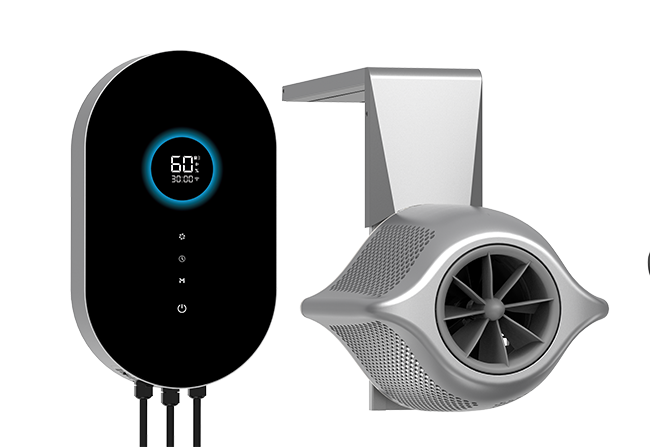
A salt water chlorinator is the ultimate upgrade in pool sanitation. This intelligent equipment works by passing mildly salted water-with a salt concentration so low it's similar to a human teardrop-through an electrolytic cell. This process safely and efficiently generates pure, fresh chlorine right in your pool. The water doesn’t feel salty like the ocean; instead, it becomes noticeably softer and silkier. It’s a closed-loop system where the salt is continuously reused, making it a highly efficient and sustainable solution.
Why Upgrade? The Benefits of Automated Sanitation
Making the switch to an automated salt chlorinator transforms your pool ownership experience. The advantages are immediate and impactful, giving you more time to simply enjoy your investment.
- Consistent and Stable Chlorine Levels: The system produces chlorine as needed, eliminating the peaks and troughs associated with manual dosing and keeping your water perfectly sanitised 24/7.
- Unmatched Convenience: Say goodbye to the hassle of buying, transporting, and storing heavy buckets of chemicals. Your pool produces its own sanitiser on-site.
- Superior Water Quality: Enjoy softer, silkier water that’s gentler on your skin, eyes, and hair, reducing the irritation often caused by traditionally chlorinated pools.
Ready to spend less time maintaining your pool and more time enjoying it? Explore modern, automated sanitation solutions with Aqua Clear Products. As trusted suppliers to Kiwi professionals and consumers, we provide the expert advice and quality equipment needed to achieve pristine water, effortlessly.
Mastering Your Pool Care: From Tablets to Total Automation
Ultimately, keeping your NZ pool sparkling and safe comes down to consistent, correct sanitation. Mastering the use of chlorine tablets is a reliable way to achieve this, provided you always prioritise safety with proper handling and storage. Remember, using a dedicated feeder or floater is essential to protect your pool's surfaces and equipment from damage, ensuring your 'water playground' remains in top condition for years of enjoyment.
While effective, manual chemical dosing requires constant attention. For Kiwi pool owners looking to reclaim their time and enjoy consistently perfect water with minimal effort, modern technology offers a superior alternative. As trusted NZ suppliers of premium pool equipment for over 30 years, we specialise in providing expert advice on creating low-maintenance, energy-efficient pools. It's time to move beyond the weekly chore of dosing.
Tired of handling chemicals? Discover the convenience of our advanced Salt Water Chlorinators. Let us help you achieve effortless water clarity and make this the season you truly enjoy your pool.