

.png)

Pool Chemistry 101: The Ultimate Guide for Kiwi Pool Owners
Staring at a cloudy pool and feeling completely overwhelmed by confusing chemical names and test strips? You're not alone. For many Kiwi pool owners, the world of pool chemistry feels more like a daunting science experiment than simple backyard maintenance. The fear of getting it wrong-wasting money on the wrong products or creating water that isn't safe for your family-can take all the fun out of owning a pool.
But it doesn't have to be this way. We believe every Kiwi deserves a crystal-clear, healthy pool without the stress. In this guide, we'll break down the basics in plain English. You'll learn how to balance your water correctly, solve common problems like green or cloudy water, and establish a simple routine that saves you time and money. Get ready to feel confident and finally achieve that sparkling, swim-ready oasis you've always wanted.
Key Takeaways
- Mastering pool chemistry comes down to balancing three key pillars: Sanitiser, pH, and Alkalinity. Get these right for a safe, crystal-clear pool.
- Discover a simple 15-minute weekly routine that prevents most common pool problems before they start, saving you time and hassle.
- Accurate and regular water testing is the secret to staying in control. We'll show you what to test for and how often for easy maintenance.
- Quickly solve common frustrations like cloudy water or algae blooms with our simple, step-by-step troubleshooting guide for Kiwi pool owners.
Table of Contents
- Why Pool Chemistry is the Secret to a Crystal Clear Pool
- The Core Pillars of Pool Chemistry: Sanitiser, pH, and Alkalinity
- Your Essential Toolkit: How to Test Pool Water Accurately
- Your 15-Minute Weekly Pool Chemistry Routine
- Solving Common Pool Problems with Chemistry
Why Pool Chemistry is the Secret to a Crystal Clear Pool
Many Kiwi pool owners believe that if the water looks clear, it must be clean. Unfortunately, looks can be deceiving. The invisible science of pool chemistry is the true secret to a healthy, safe, and genuinely crystal clear swimming experience. Getting it right isn't just about avoiding a green pool; it's about achieving three crucial goals: effective sanitation, perfect water balance, and ultimate safety for your family.
Think of balanced water as the foundation for everything else. When your pool’s pH, alkalinity, and calcium hardness are in their ideal ranges, your sanitiser (like chlorine) can work at peak efficiency. This means you use fewer chemicals and spend less money. In fact, nearly every common pool problem-from cloudy water to stubborn algae-can be traced back to an imbalance. Understanding the basics of pool sanitation is the first step to preventing these issues before they start.
The Dangers of Unbalanced Water
When your pool’s chemistry is off, it can cause a cascade of frustrating and costly problems. An unbalanced pool isn't just uninviting; it can be unsafe and destructive, creating issues like:
- Skin and eye irritation: That stinging, burning sensation swimmers feel is rarely from too much chlorine. It's almost always caused by an incorrect pH level.
- Corrosion of pool equipment: Acidic water can eat away at metal ladders, pump seals, vinyl liners, and heat exchangers, leading to expensive repairs.
- A breeding ground for germs: When sanitisers are rendered ineffective, harmful bacteria and algae can thrive, turning your backyard oasis into a health hazard.
The Benefits of Getting It Right
Investing a little time in your pool chemistry pays huge dividends. The rewards go far beyond just having a beautiful pool to look at:
- A safe and inviting swimming environment: Enjoy total peace of mind knowing the water is healthy and comfortable for everyone.
- Extends the life of your equipment: Protect your investment by preventing corrosion and scale build-up, saving you thousands of NZ$ over the life of your pool.
- Reduces chemical costs: Balanced water lets your sanitiser work efficiently, meaning you'll buy and use fewer chemicals and costly 'shock' treatments.
- Makes physical cleaning more effective: When water is balanced, it's harder for algae and grime to take hold, making your robotic pool cleaner's job much easier.
The Core Pillars of Pool Chemistry: Sanitiser, pH, and Alkalinity
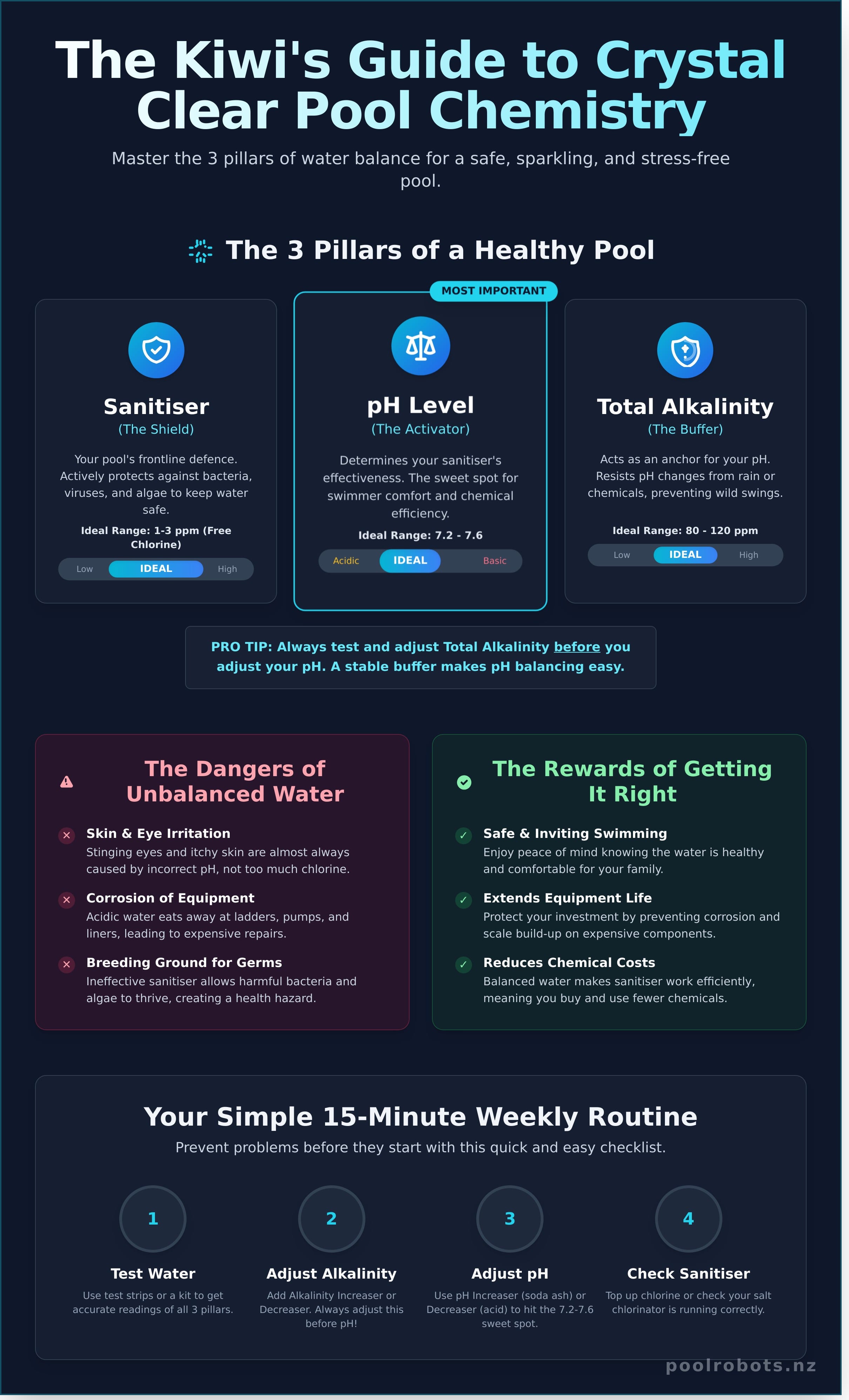
Getting to grips with pool chemistry can feel daunting, but it’s much simpler when you focus on the fundamentals. Think of water balance as a three-legged stool, with each leg representing a core pillar: Sanitiser, pH, and Total Alkalinity. For a stable, healthy pool, all three must work together in harmony. Get one wrong, and the whole system can become wobbly.
To make it easy, let's use an analogy:
- Sanitiser is the Shield: It actively protects your pool from germs.
- pH is the Activator: It determines how effective that shield is.
- Alkalinity is the Buffer: It keeps the activator stable and predictable.
While other factors like Calcium Hardness and Cyanuric Acid (stabiliser) also play a role, mastering these "big three" is the first and most important step to achieving crystal clear, safe water.
Pillar 1: Sanitiser (Your Pool's Shield)
Your sanitiser, most commonly chlorine, is the frontline defence against bacteria, viruses, and algae. Its job is to keep your water safe and clean. When you test, you’ll see Free Chlorine (FC), which is the active, available chlorine ready to fight contaminants. The ideal range for FC in a residential pool is 1-3 parts per million (ppm). Many modern Kiwi pools now use a salt chlorinator, which is a fantastic, hassle-free system that automatically generates its own chlorine from salt in the water.
Pillar 2: pH Levels (The Activator)
The pH level measures how acidic or basic your pool water is on a scale from 0 to 14. A pH of 7 is neutral. Anything below is acidic, and anything above is basic (alkaline). For New Zealand pools, the ideal pH range is 7.2 to 7.6. This is the sweet spot for two reasons: it ensures your chlorine works at peak effectiveness, and it provides maximum comfort for swimmers, preventing itchy skin and stinging eyes. If your pH is too high, your chlorine becomes lazy and ineffective, no matter how much you add.
Pillar 3: Total Alkalinity (The Buffer)
Total Alkalinity (TA) is a measure of the water's ability to resist changes in pH. Think of it as an anchor for your pH level. Without a
proper TA level, your pH can swing wildly with even a small amount of rain or chemical addition. The recommended range for TA is 80
- 120 ppm.
A crucial tip for any pool owner: always test and adjust your Total Alkalinity before you adjust your pH. By setting your
anchor first, you make balancing your pH much easier and more stable.
Your Essential Toolkit: How to Test Pool Water Accurately
When it comes to your pool, you can't manage what you don't measure. Consistent water testing is the single most important habit for maintaining a healthy, crystal-clear pool. It removes the guesswork and helps you prevent problems like algae blooms or cloudy water before they start.
We recommend testing your pool at least once a week, and more often during the peak Kiwi summer or after heavy use. For the most accurate reading, always take your sample before adding any chemicals. Collect water about elbow-deep, away from the skimmer and return jets, to get a sample that truly represents your pool's overall condition.
Choosing Your Testing Method
You have a few great options for testing your water. The best one for you depends on your budget and how precise you want to be.
- Test Strips: These are fast and easy to use. Simply dip a strip, wait a few seconds, and compare the colours. While convenient, they are generally less accurate than other methods.
- Liquid Reagent Kits: The gold standard for DIY pool care. You add drops of reagent to a water sample and compare the resulting colour to a chart. They are highly accurate and give you a true picture of your pool chemistry.
- Digital Testers: For the tech-savvy pool owner, these electronic devices offer fast, precise digital readouts, eliminating any colour-matching guesswork.
Our expert advice? Start with a quality liquid reagent kit. It provides the accuracy you need to learn and master your pool's chemistry with confidence.
Reading the Results: What the Colours Mean
Interpreting your test results correctly is crucial. Always read your test strips or vials in good, natural daylight-not under artificial light or in direct, harsh sun. Hold the comparator up against the white background provided in your kit for a true colour match. We highly recommend keeping a simple logbook of your results. This helps you spot trends and understand how your pool behaves over time.
The Correct Order for Adding Chemicals
Did you know that adding chemicals in the wrong order can waste your time and money? To be effective, adjustments must be made in a specific sequence. It’s a critical step for successful pool care.
- Total Alkalinity (TA): Adjust this first. Think of TA as the anchor for your pH. If your alkalinity is in range, your pH will be much more stable and less prone to wild swings.
- pH: Adjust this second. With the TA set, you can now accurately balance your pH. Proper pH is essential for swimmer comfort and for your chlorine to work effectively.
- Sanitiser (Chlorine): Add your chlorine last. Chlorine is most effective when the pH is correctly balanced, meaning you’ll use less of it to keep your pool safe and sanitised.
Your 15-Minute Weekly Pool Chemistry Routine
Keeping your pool water healthy doesn't need to be a chore. Forget guesswork and complex schedules. By following this simple 15-minute weekly checklist, you can master your pool chemistry and prevent over 90% of common problems like algae blooms and cloudy water. The key isn't perfection; it's consistency. A little effort each week goes a long way to ensuring a crystal-clear, safe pool for your family to enjoy.
This routine relies on two core principles: good circulation and effective filtration. When your water is moving and being filtered properly, your chemicals can do their job effectively. Let's get started.
Step 1: Skim & Check (2 minutes)
Start with a quick visual inspection. Grab your leaf rake and skim any leaves, insects, or other large debris from the surface. Next, turn off the pump and empty the skimmer and pump baskets. Clogged baskets restrict water flow, which is essential for a healthy pool. Finally, turn the pump back on and ensure it's running smoothly and quietly.
Step 2: Test & Analyse (5 minutes)
Now it's time to see what's happening in your water. Take a clean water sample by dipping the container elbow-deep, away from any return jets. Using your test kit or strips, check for these three core levels:
- Free Chlorine: Your primary sanitiser that kills germs.
- pH: How acidic or alkaline your water is.
- Total Alkalinity: The buffer that helps keep your pH stable.
Jot down your results in a logbook. This helps you track trends over time and understand your pool's unique needs.
Step 3: Dose & Balance (5 minutes)
Based on your test results, it's time to add any necessary chemicals. Carefully calculate the required dosage for your pool's volume, always following the manufacturer's instructions printed on the label. This is the most critical part of your weekly pool chemistry routine. For safety, add each chemical to the pool separately, allowing time for it to dissolve before adding the next. Never mix different pool chemicals together before adding them to the water.
Step 4: Circulate & Clean (3 minutes)
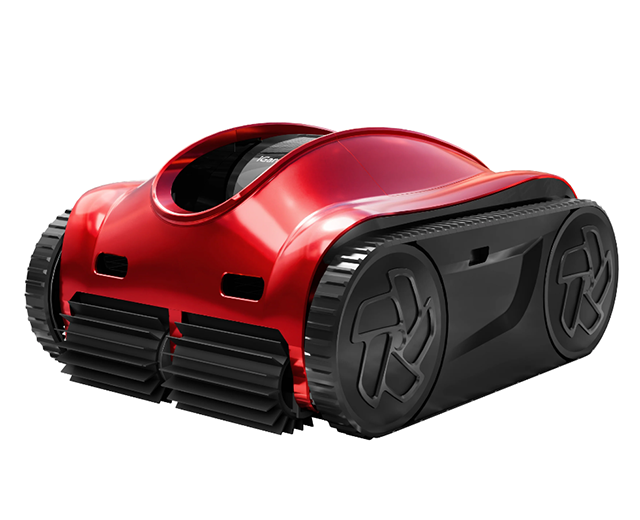
Your work is almost done! After adding chemicals, your pump needs to run for several hours to circulate the water and distribute them evenly. This is the perfect time to let technology take over the physical work. Pop your robotic pool cleaner in the water to scrub the walls and floor. A robot not only removes fine debris your skimmer might miss but also helps mix the chemicals throughout the pool, ensuring everything is perfectly balanced. Let a robot handle the cleaning while you relax.
Solving Common Pool Problems with Chemistry
Even with the best care, every pool owner in New Zealand will face a water issue at some point. Don't worry, these are common problems with simple fixes. The good news is that most can be solved quickly once you understand the underlying pool chemistry. Think of this as your simple troubleshooting guide to getting that crystal clear, healthy water back.
Problem: Cloudy or Murky Water
If your once-sparkling pool now looks hazy or milky, it’s usually a sign of a chemical imbalance or filtration issue. The most common causes are high pH levels, not enough sanitiser, or fine particles that are too small for your filter to catch on its own.
Here’s how to clear it up:
- Check and Balance: Test your water. High pH is a frequent culprit, so use a pH decreaser to bring it back into the ideal 7.2 - 7.6 range.
- Shock the Pool: A good dose of chlorine shock will eliminate contaminants and restore your sanitiser’s power.
- Filter and Clarify: Run your filter continuously for at least 24 hours. For an extra boost, use a pool clarifier to help bind tiny particles together, making them large enough for your filter to trap.
Problem: Green Water (Algae)
The dreaded green pool is almost always caused by algae. Algae blooms happen when there isn't enough free chlorine in the water to prevent them from growing, especially on warm, sunny days.
To get your pool back to blue:
- Brush Everything: Use a pool brush to scrub the algae off the walls, steps, and floor. This pushes it into the water where your chemicals can work effectively.
- Balance and Shock: Check and adjust your pH first, then shock the pool with a strong dose of chlorine to kill the algae.
- Filter 24/7: Run your filter system around the clock until the water is completely clear, backwashing as needed to clear out the dead algae. A robotic pool cleaner can be a huge help here, as it actively scrubs surfaces and improves water circulation.
Problem: Strong Chlorine Smell & Irritated Eyes
It sounds strange, but that powerful "chlorine" smell and stinging eyes are not caused by too much chlorine. In fact, it usually means you need to add more. This is where your knowledge of pool chemistry really pays off.
That unpleasant smell comes from chloramines, which are formed when chlorine combines with contaminants like sweat and oils from swimmers. This "combined chlorine" is ineffective and irritating. The solution is to shock the pool. A heavy dose of chlorine breaks down the chloramine bonds, freeing up your chlorine to sanitise properly and eliminating the smell.
From Confident Chemist to Relaxed Pool Owner
Mastering the basics of sanitiser, pH, and alkalinity is the secret to transforming your pool from a chore into a backyard oasis. As you've seen, a simple 15-minute weekly routine is all it takes to keep your water sparkling clean and safe for the whole whānau. With this guide, you now have the knowledge to confidently manage your pool chemistry and troubleshoot any issues that arise.
But balanced water is only half the battle. To truly achieve that effortless, crystal-clear look, you need to keep your pool free of leaves, dirt, and debris. That's where we can help make your life even easier.
As New Zealand's leading robotic pool cleaner specialists, Pool Robots NZ provides expert advice to make pool care simple. We even offer free demonstrations NZ-wide to help you find the perfect match. Keep your balanced pool spotless. Explore our full range of robotic cleaners at Pool Robots NZ.
You're now well on your way to a hassle-free summer of swimming. Enjoy your beautiful pool!