
.png)

The Ultimate NZ Guide to Swimming Pool Pumps
Understand everything you need to know about the heart of your pool, from how pumps work to choosing the perfect energy-efficient model for your Kiwi backyard.
What is a Pool Pump and Why is it the Heart of Your Pool?
Think of your pool pump as the heart of a circulatory system. It’s the essential piece of equipment that draws water from the pool, pushes it through a filter and sanitation system, and then returns it, clean and healthy. Without this constant circulation, your pool would quickly become stagnant, cloudy, and a breeding ground for algae and bacteria.
A properly functioning pool pump is responsible for:
- Circulating water for effective filtration and chemical distribution.
- Preventing algae growth by keeping the water moving.
- Ensuring the water is safe and healthy for you and your family to enjoy.
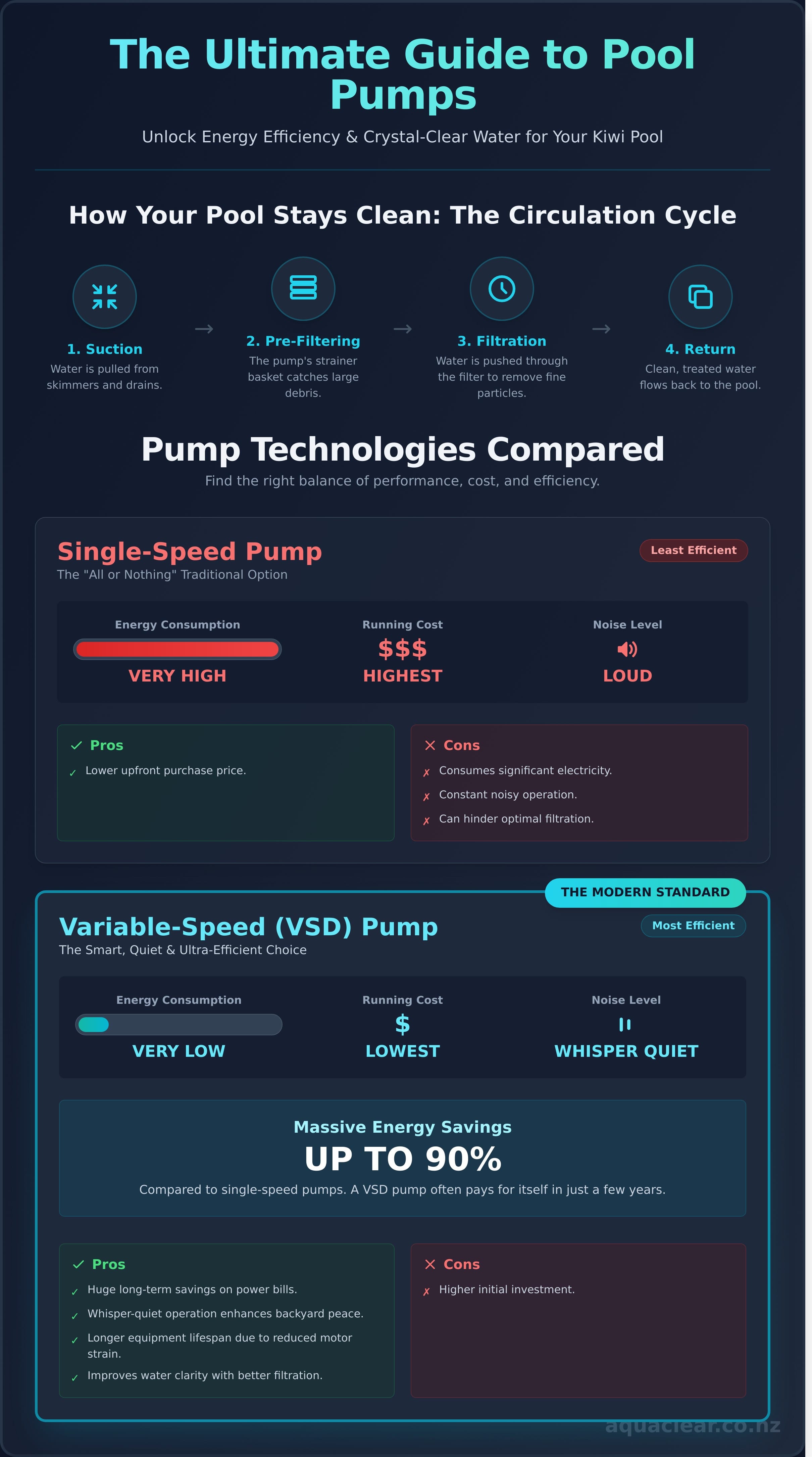
The water's journey is a simple cycle: it's pulled from the pool, cleaned and treated, and then pushed back in. This cycle is the foundation of a crystal-clear swimming experience.
The Core Components of a Pool Pump
Every pool pump consists of a few key parts working in unison:
- The Motor: This is the powerhouse, converting electrical energy into the mechanical energy needed to drive the pump.
- The Impeller: A fast-spinning rotor with curved vanes that grabs the water and propels it forward with centrifugal force.
- The Strainer Basket: Located at the front of the pump, this basket catches leaves, hair, and other large debris, acting as the first line of defence to protect the pump's internal components.
- The Housing: The durable outer casing that encloses and protects the motor, impeller, and basket.
Understanding the Pool Circulation Cycle
Here’s a step-by-step look at how your pump keeps your pool pristine:
- Suction: Water is pulled from the pool through skimmer boxes and main drains.
- Straining: The water passes through the pump's strainer basket, where large debris is trapped.
- Filtration: The pump's impeller pushes the water under pressure through your pool filter, which removes fine particles like dirt, dust, and algae spores.
- Sanitation & Heating: After the filter, the water may pass through other equipment, such as a salt chlorinator or a heater.
- Return: The clean, treated, and potentially heated water flows back into the pool through return jets.
Types of Pool Pumps: Choosing the Right Technology
For Kiwi pool owners, choosing a pump isn't just about power—it's about technology. Pool pump technology has evolved significantly, moving away from energy-guzzling models towards smart, efficient solutions. Your choice will directly impact your pool's performance, your backyard's ambiance, and most importantly, your power bill.
| Speed Control | One fixed, high speed | High and low settings | Fully adjustable, precise speed control |
| Energy Efficiency | Very Low | Moderate | Extremely High |
| Operating Noise | Loud | Moderate to Loud | Whisper-Quiet |
| Upfront Cost | Low | Medium | Higher |
| Long-Term Cost | Very High | High | Very Low |
| Filtration Quality | Basic | Good | Optimal |
Single-Speed Pumps: The Traditional Option
Single-speed pumps are the old guard of pool circulation. They operate at one constant, high speed whenever they are switched on.
- Pros: They have the lowest initial purchase price.
- Cons: They are incredibly inefficient, consuming a huge amount of electricity. They are also noisy and their constant high speed can be less effective for filtration.
Two-Speed Pumps: A Step Up
These pumps offer a high and a low speed setting, giving you slightly more flexibility. You can run it on low for general filtration and switch to high for tasks like backwashing.
- Pros: More energy-efficient and flexible than single-speed models.
- Cons: This technology is now largely outdated, having been surpassed by the far superior efficiency and control of variable speed pumps.
Variable Speed (VSD) Pumps: The Modern Standard
Variable Speed Drive (VSD) pumps are the undisputed champions of the modern pool. They allow you to precisely control the motor's speed, running it slower for longer periods. This is key to their efficiency, as a fundamental law of physics states that halving a pump's speed reduces its energy consumption by nearly 85%.
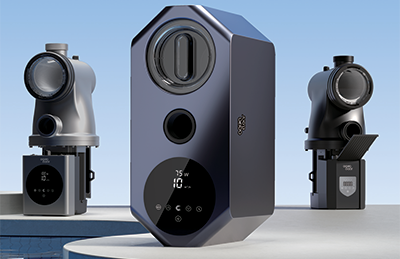
The pinnacle of this technology is found in full inverter pumps, such as our Aqua Inverter series. These advanced models use intelligent algorithms to automatically adjust their speed for optimal performance and maximum energy savings, making them the smartest and most cost-effective choice for any Kiwi pool.
- Pros: Massive energy savings (up to 90%), whisper-quiet operation, better filtration, and a longer lifespan for the pump and other pool equipment.
- Cons: A higher initial investment, but the significant savings on your power bill mean they quickly pay for themselves.
How to Size Your Pool Pump Correctly
Choosing the right size pump is critical. A common myth is that a bigger, more powerful pump is always better, but this is false. An oversized pump wastes energy, can make excessive noise, and can even damage your filter and plumbing. Sizing is about matching the pump's performance to your pool's specific needs using two key metrics: flow rate and dynamic head.
Step 1: Calculate Your Pool's Volume
First, you need to know how much water your pool holds.
- Rectangular Pools: Length (m) x Width (m) x Average Depth (m) = Volume in m³. To get litres, multiply by 1000.
- Circular Pools: π (3.14) x Radius² (m) x Average Depth (m) = Volume in m³. To get litres, multiply by 1000.
Example: A rectangular pool that is 8m long, 4m wide, and has an average depth of 1.5m has a volume of 48m³, or 48,000 litres.
Step 2: Determine Your Required Flow Rate
The 'turnover rate' is the time it takes for the pump to circulate the entire volume of your pool through the filter. For a residential pool in New Zealand, an ideal turnover rate is once every 6 to 8 hours.
Flow Rate (Litres per Minute) = Pool Volume (Litres) ÷ Turnover Time (in Minutes)
Example: For our 48,000-litre pool, aiming for an 8-hour turnover (480 minutes): 48,000 Litres ÷ 480 Minutes = 100 Litres Per Minute (LPM).
This means you need a pump capable of delivering at least 100 LPM to keep your pool clean.
Step 3: Understanding 'Dynamic Head'
'Dynamic head' is the total resistance your pump has to overcome to push water through the entire plumbing system. Factors that increase dynamic head include:
- The length and diameter of your pipes
- The number of bends and fittings
- The type of filter, heater, and chlorinator you have
- The height difference between the pump and the pool
Calculating dynamic head can be complex. This is where professional advice is invaluable to ensure your chosen pump will perform perfectly in your specific setup.
Contact our experts for a free assessment and help with pump sizing.
Key Features to Look for in a Modern Pool Pump
Beyond basic sizing, several features separate a good pump from a great one. These innovations improve efficiency, reduce noise, and make your life as a pool owner easier.
Energy Efficiency and Cost Savings
This is the single most important factor. Look for pumps that feature Variable Speed Drive (VSD) and, for the ultimate performance, full inverter technology. Pumps like the Aqua Inverter series use this to intelligently manage power, resulting in energy savings of up to 90% compared to traditional models. This translates directly to hundreds of dollars saved on your power bill each year.
Quiet Operation for a Peaceful Backyard
Older pumps are notoriously noisy because their high-speed induction motors create significant vibration and noise. Modern pumps, especially those with water-cooled motors, operate at a much lower decibel level. A quality variable speed pump running at a low filtration speed is often whisper-quiet, allowing you to enjoy a peaceful backyard environment.
Durability for New Zealand Conditions
Your pool pump is exposed to the elements, so it needs to be tough. Look for models built with high-quality, corrosion-resistant materials. Key features include a UV-resistant housing to withstand the harsh NZ sun and high-quality mechanical seals to ensure a long, leak-free life. A strong warranty backed by local support provides extra peace of mind.
Smart Controls and Automation
The best modern pumps are incredibly user-friendly. Features like intuitive digital displays or touch screens make it easy to set up and monitor performance. The Aqua Inverter series, for example, features AI modes that can automatically run a backwash cycle or adjust flow rates for optimal efficiency, taking the guesswork out of pool maintenance and saving you money.
Common Pool Pump Problems & Basic Troubleshooting
Even the best pumps can have off days. Here are a few common issues and simple checks you can perform before calling a professional.
Problem: Pump is Not Turning On
- Check 1: Is the circuit breaker tripped? Check your home's switchboard.
- Check 2: Is the pump's timer set correctly and is it receiving power?
- Check 3: Has the motor overheated? Many pumps have a thermal overload switch that will shut them off. Let it cool down completely before trying to restart it.
Problem: Pump is Running but No Water is Moving
- Check 1: Is the pool water level high enough? It should be at least halfway up the skimmer box opening.
- Check 2: Are the skimmer and pump strainer baskets full of debris? A clog here will prevent water flow.
- Check 3: Could there be an air leak? Check for cracks in the pump lid or loose fittings on the suction line. Bubbles in the strainer basket are a key sign.
Problem: Pump is Making a Loud Humming or Screeching Noise
- Humming: A loud hum without the impeller spinning could be a jammed impeller or a failed capacitor.
- Screeching/Grinding: This is often a sign of worn-out motor bearings.
Important: For issues like humming or grinding noises, it's best to turn the pump off immediately and call a
professional. Running it could cause more severe damage.
Frequently Asked Questions (FAQs)
Ready to experience the quiet efficiency and long-term savings of a modern pool pump? Investing in the right technology not only guarantees a healthier pool but also delivers a significant return through energy savings.
Explore our range of trusted, energy-efficient pool pumps.
- Trusted suppliers to Kiwi pool owners for over 30 years
- Expert before-and-after sales support
- Specialists in energy-efficient pool technology