.png)

What Size Pool Heat Pump Do I Need? A NZ Sizing Guide
Choosing a new heat pump for your pool can feel like a high-stakes decision. Go too small, and you’ll be left with a lukewarm pool and frustratingly high running costs. Go too big, and you've overspent on a powerful unit you simply don't need. It’s no wonder that one of the most common questions we hear from Kiwi pool owners is, what size heat pump do I need NZ for our unique climate and conditions?
Getting it right is crucial for both your budget and your enjoyment. This is where our expertise comes in. As trusted suppliers to Kiwi professionals and consumers, we’ve created this comprehensive guide to cut through the confusion of kilowatts (kW) and technical jargon. We will walk you through every critical factor, from your pool’s surface area to the importance of a pool cover. By the end, you'll have the confidence to select an efficient, perfectly-sized unit that extends your swimming season and turns your backyard into the ultimate water playground.
Key Takeaways
- Correctly sizing your pool heat pump from the start is the key to maximising heating efficiency and minimising your power bills.
- Sizing goes beyond just your pool's volume; factors like your location in NZ, desired temperature, and whether you use a cover are just as critical.
- To answer what size heat pump do i need nz, you must first understand the relationship between your pool's unique conditions and the unit's kW output.
- While online calculators offer a starting point, professional advice is essential to account for all variables and guarantee the perfect fit for your water playground.
Table of Contents
- Why Correctly Sizing Your Pool Heat Pump is Crucial
- The 5 Key Factors That Determine Your Ideal Heat Pump Size in NZ
- Decoding the Jargon: Understanding kW, BTU & COP
- A Practical Pool Heat Pump Sizing Guide for New Zealand
- Get the Perfect Size: Why Expert Advice Matters
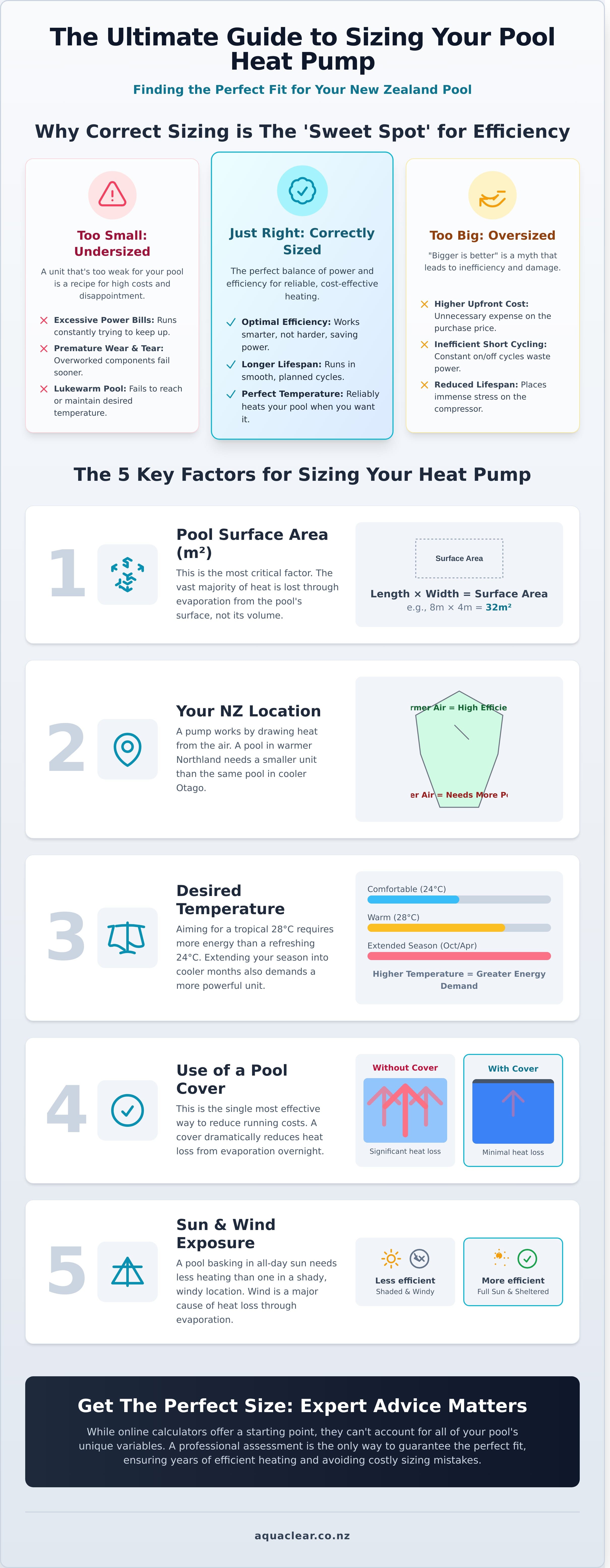
Why Correctly Sizing Your Pool Heat Pump is Crucial
When you decide to extend your swimming season in New Zealand, a pool heat pump is a brilliant investment. However, it's vital to understand that the unit required for your pool is a specialised piece of equipment, engineered differently from the one that warms your lounge. It’s designed specifically to transfer ambient heat into a large, constantly evaporating body of water.
Getting the size right is the single most important factor for achieving both cost-effective operation and a perfectly warm pool. For Kiwi pool owners, the question of 'what size heat pump do i need nz' isn't about guesswork; it's about finding the perfect balance between heating power and efficiency. This avoids two common and costly mistakes: choosing a unit that's too small or one that's far too large.
The Problem with an Undersized Heat Pump
Choosing a heat pump that is too small for your pool's volume and local conditions is a recipe for frustration. The unit will be forced to run almost constantly, struggling to reach, let alone maintain, your desired temperature, especially on cooler days. This leads to a cascade of negative outcomes:
- Excessive Power Bills: Constant operation means your electricity meter will be spinning, leading to unnecessarily high running costs.
- Premature Wear and Tear: The unit's components, like the compressor, are overworked, significantly shortening its operational lifespan.
- A Lukewarm Pool: You'll be left with a pool that never quite gets warm enough, defeating the very purpose of your investment.
The Dangers of an Oversized Heat Pump
While it might seem like a "bigger is better" approach would solve the problem, oversizing a heat pump creates its own set of inefficiencies. While it will heat the water quickly, the long-term consequences can be just as damaging as undersizing. The primary issue is a process known as 'short cycling'.
- Higher Upfront Cost: A larger unit comes with a significantly higher purchase price, an unnecessary initial expense.
- Inefficient Short Cycling: The unit will heat the water so fast that it constantly turns on and off. This frequent start-stop cycle is highly inefficient and places immense stress on the compressor.
- Reduced Lifespan: Just like a car engine in stop-start city traffic, the constant cycling causes excessive wear, potentially leading to premature failure.
Ultimately, the goal is to find that 'sweet spot'. A correctly sized heat pump works smarter, not harder, bringing your pool to the perfect temperature efficiently and reliably. Understanding the basics of how a heat pump works helps clarify why this balance is so critical for the long-term health of your equipment and the enjoyment of your backyard water playground.
The 5 Key Factors That Determine Your Ideal Heat Pump Size in NZ
Choosing the right heat pump isn't about picking the biggest unit; it's about finding the most efficient one for your unique situation. The answer to "what size heat pump do I need NZ" depends on a combination of factors working together. Understanding these five key variables will empower you to make a confident, cost-effective decision and get the most from your water playground for years to come.
1. Pool Surface Area (m²)
While many people focus on water volume, the most critical measurement for heat loss is your pool's surface area. The vast majority of heat escapes from the top of the pool through evaporation. Calculating this is straightforward: simply multiply the length by the width. This figure is the primary starting point for any professional sizing calculation. For a deeper look into the technical aspects of sizing a heat pump pool heater, it's worth noting how surface area directly impacts the energy required to maintain temperature.
- Common NZ Example (8x4m pool): 8m x 4m = 32m² surface area
- Large NZ Example (10x5m pool): 10m x 5m = 50m² surface area
2. Your Location & Climate
New Zealand's diverse climate means a one-size-fits-all approach doesn't work. A pool in sunny Northland, with its warmer ambient air temperatures, will require a smaller, less powerful heat pump than an identical pool in cooler Otago. Heat pumps work by drawing warmth from the surrounding air, so they operate far more efficiently when the air is warmer. Your local climate dictates the baseline power your unit will need to perform effectively.
3. Desired Water Temperature & Usage
How warm do you like your water, and when do you want to swim? A comfortable target of 28°C requires significantly more energy than a cooler 24°C. Furthermore, if you plan to extend your swimming season into the cooler shoulder months like October or April, your heat pump will need to work harder. A unit sized only for peak summer use in January will struggle to heat your pool efficiently in the cooler temperatures of spring and autumn.
4. Pool Cover Usage: The Game Changer
This is the single most important factor in retaining heat and reducing your running costs. A quality pool cover can prevent up to 75% of heat loss, primarily by stopping evaporation. Using a cover consistently means the heat your pump generates stays in the water. This often allows you to install a smaller, more affordable heat pump that costs less to run, delivering significant savings over the life of the unit.
5. Wind and Sun Exposure
Finally, consider your pool's immediate environment. A pool located in a windy, exposed area will lose heat much faster than one sheltered by fences, buildings, or landscaping. Conversely, a pool that receives full, all-day sun gets a significant amount of "free" heat from solar energy. A sheltered, sunny pool is the most efficient to heat and may require a slightly less powerful unit than a heavily shaded or wind-swept pool of the exact same size.
Decoding the Jargon: Understanding kW, BTU & COP
When you start comparing pool heat pumps, you'll be met with a wall of technical specs. Don't be intimidated. Understanding three key terms-kW, BTU, and COP-is all you need to cut through the noise and make a confident choice. Think of this as learning the language of heat pumps, so you can translate specifications into real-world performance and running costs for your Kiwi pool.
Output Power: Kilowatts (kW) and BTUs
Kilowatts (kW) and British Thermal Units (BTU) both measure the same thing: the raw heating power a unit can produce. Think of it like the horsepower of a car's engine-a higher number means more power to heat your pool water faster. Most NZ suppliers use kW, but you may see BTUs online. The conversion is simple:
1 kW is approximately 3,412 BTUs.
A small plunge pool might only require a 9kW unit, while a large family pool could need a 17kW model or more. This output rating is the first and most important factor in determining the right size for your needs.
Efficiency Rating: The COP (Coefficient of Performance)
If kW is the engine's power, the COP is its fuel economy. The Coefficient of Performance measures how efficiently a heat pump converts electricity into heat. A higher COP is always better. For example, a heat pump with a COP of 6 generates 6kW of heat for every 1kW of electricity it consumes. A less efficient model with a COP of 3 would need double the power (and cost) to produce the same heat. Choosing a high-COP model is vital for keeping your power bills down, especially as even small temperature adjustments matter. In fact, studies on the energy consumption for each degree rise show costs can increase by 10-30%.
What About Inverter Technology?
Modern pool heat pumps feature inverter technology, which makes them far superior to older single-speed models. A single-speed unit is either fully on or fully off-like a light switch. An inverter model, however, works like a car's cruise control, automatically adjusting its speed to maintain the desired temperature. This intelligent operation provides significant benefits:
- Greater Energy Efficiency: By running at lower speeds most of the time, they slash your energy costs.
- Quieter Operation: No more loud stop-start cycles, just a consistent, quiet hum.
- Longer Lifespan: Less stress on components means a more durable, reliable unit.
Understanding these three elements-power (kW), efficiency (COP), and technology (Inverter)-is the key to answering the question of what size heat pump do I need NZ for my backyard.
A Practical Pool Heat Pump Sizing Guide for New Zealand
While a precise calculation considers many variables, we can provide a reliable starting point to help you understand your needs. This guide offers a general overview and practical examples to illustrate how different factors influence the final decision. It's the first step in answering the crucial question: what size heat pump do i need nz for my specific water playground?
General Sizing Chart (With a Pool Cover)
This chart offers a basic recommendation for an average swimming season (e.g., November to March) in a temperate climate like Auckland, assuming consistent use of a quality solar pool cover.
| Up to 25m² | 9kW |
| 25m² - 40m² | 13kW |
| 40m² - 55m² | 17kW |
| 55m² - 70m² | 21kW |
Disclaimer: This is an estimate for average conditions. Factors like location, wind exposure, and desired temperature will affect the ideal size.
Example 1: The Auckland Family Pool (40m²)
An Auckland family has an 8x5 metre (40m²) pool. They use a solar cover every night and want to maintain a comfortable 28°C from November through March. According to our chart, a 13kW heat pump is an excellent starting point. In Auckland's relatively warm climate, an efficient inverter model of this size will easily maintain the target temperature without being overworked, ensuring low running costs.
Example 2: The Christchurch Lap Pool (30m²)
A Christchurch owner has a 10x3 metre (30m²) lap pool. They do not use a cover and want to extend their swimming into the cooler shoulder seasons of spring and autumn. Although the pool is smaller than the Auckland example, the heating demand is significantly higher. The lack of a cover leads to massive heat loss, and the colder ambient air temperature in Christchurch means the unit must work much harder. This pool would likely require a more powerful 13kW or even a 17kW unit to achieve and hold a comfortable temperature effectively.
As these examples show, getting the right size is about more than just the volume of your pool. To ensure you invest in an efficient, cost-effective solution tailored to your home, a professional assessment is always the best path forward.
Ready for a precise calculation? Talk to our experts today.
Get the Perfect Size: Why Expert Advice Matters
While online calculators can offer a starting point, they rarely capture the full picture of your unique pool environment. Factors like wind exposure, sun hours, and your family's swimming habits can significantly impact heating requirements. An undersized unit will struggle to maintain temperature and run constantly, while an oversized one leads to unnecessary upfront costs and inefficient cycling. This is where professional guidance becomes invaluable for your investment.
At Aqua Clear Products, we have been the trusted suppliers for Kiwi professionals and consumers for over 30 years. Our experience ensures we move beyond basic formulas to provide a truly customised recommendation, giving you peace of mind and a perfectly heated pool.
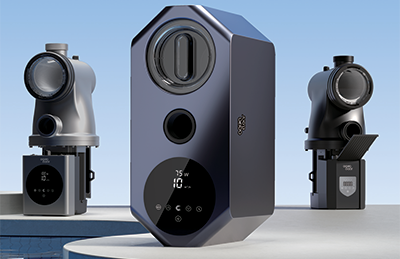
Our Range of Energy-Efficient Inverter Heat Pumps
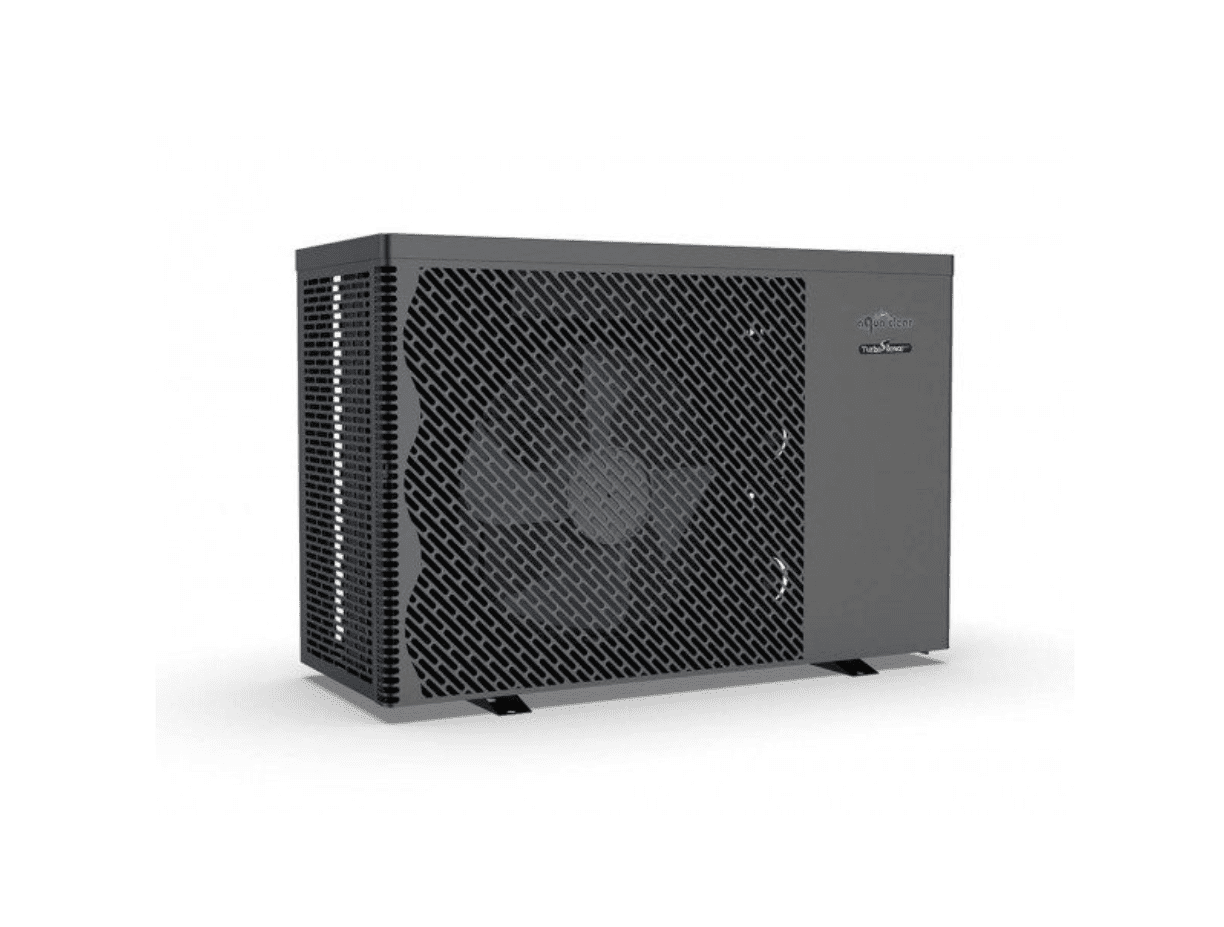
Choosing the right size is only half the battle; the quality of the heat pump is just as critical. Our curated range of inverter heat pumps is selected for superior performance and reliability in New Zealand conditions. Key features include:
- High COP Ratings: Industry-leading Coefficient of Performance means you get maximum heating output for every dollar spent on electricity, significantly lowering your running costs.
- Whisper-Quiet Operation: Enjoy your poolside sanctuary without the disruptive noise of older, less advanced models.
- Smart Inverter Technology: Our units automatically adjust their power to meet demand, ensuring stable temperatures and ultimate energy efficiency.
A correctly sized heat pump from our range guarantees you get the most from your water playground, season after season.
Request a Free, No-Obligation Sizing Assessment
Stop guessing and get a definitive answer to the question, what size heat pump do I need nz? Let our experienced team provide a comprehensive and accurate assessment tailored specifically to your pool and lifestyle. We will analyse all the unique variables to recommend the most effective and energy-efficient model for your needs.
Ensure your investment is perfect from day one. Contact us today for a free, no-obligation sizing and quote to transform your pool heating experience.
Get Your Free Professional Sizing Assessment Now
The Final Step: Ensuring Your Perfect Pool Temperature
Choosing the right pool heat pump is a crucial investment in your family's enjoyment. As we've covered, correct sizing goes far beyond your pool's volume-it requires a careful look at your local climate, pool cover use, and desired swimming season. Answering the question, 'what size heat pump do i need nz', is about finding the perfect balance for maximum efficiency and minimum running costs.
Why leave it to guesswork? As trusted suppliers to Kiwi pool owners for over 30 years, the team at Aqua Clear removes the uncertainty. We are specialists in modern, energy-efficient inverter technology and provide comprehensive before-and-after sales support to ensure you get the best possible performance from your investment. We'll help you select a unit that works smarter, not harder.
Take the next step towards a perfectly heated pool. Get a free, expert sizing recommendation for your pool today.