Updated 22 October 2026
Most of a pool's power goes on two things: the filter pump and, if you heat the pool, the heater. Get those two right and you've done most of the work. This guide covers what makes a difference, for homeowners and for the pool builders, pool shops and service techs who advise them.
Look at the label on your pump for its power rating in watts, and check your power bill for your rate in cents per kWh.
Daily cost = pump kW × hours run per day × your $/kWh rate
Example (using MBIE's national average residential price of 42.1 c/kWh, including GST, from the Quarterly Survey of Domestic Electricity Prices, 15 August 2026):
The 42.1c figure is an average. MBIE models a household using about 22 kWh a day on an advertised low-user plan, so your own rate will differ. Use the c/kWh rate on your bill. Source: MBIE, Quarterly Survey of Domestic Electricity Prices, 15 August 2026 (MBIE electricity cost and price monitoring)
A standard single-speed pump runs flat out the whole time. Everyday filtering doesn't need full speed.
For a centrifugal pump like a pool pump, three simple rules describe what happens when you change its speed:
Worked example (in % terms): run a pump at 50% speed for twice as long and it moves the same amount of water as running at full speed. But it uses 12.5% power × 2 = about 25% of the energy, which is roughly a 75% saving. At 75% speed, power is about 42% of full speed (0.75³).
In dollars, using the 1.2 kW pump and 42.1c/kWh from above: at 50% speed, power is 0.125 × 1.2 kW = 0.15 kW. Over 16 hours that's 0.15 × 16 = 2.4 kWh × $0.421 = about $1.01 a day, against $4.04 at full speed for 8 hours. Same water moved, about 75% less power. These are theoretical figures, and real results depend on your pipework, filter and motor. Your pool still needs enough flow to filter properly and to run heaters and chlorinators. Aqua Clear finds 40–50% speed generally works well.
Source: Engineering ToolBox, Affinity Laws for Pumps.
You have two options:
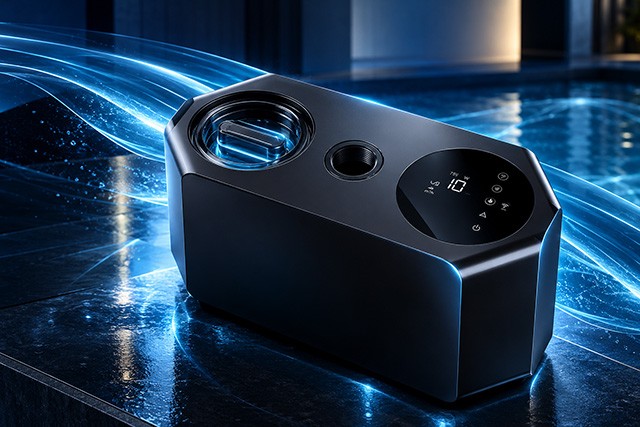
The AquaX iSaver Variable Frequency Drive is a variable frequency device for existing single-speed pumps. It sits between the power socket and the pump, and it slows the pump by changing the frequency of the power going to it. That's the affinity-law saving above, without buying a new pump. You set speeds and schedules on the touchscreen: low for daily filtering, higher for short jobs like backwashing or vacuuming. It also has overload, dry-run and motor-fault protection. AquaX says it can save up to 80% on pump energy costs. Your actual saving depends on your pump, the speeds you choose and how long you run it. Check with your pool professional or electrician about installation.
If your pump is old or failing, a full inverter pump is worth a look. The Aqua InverterFlow Premium uses a stepless DC brushless motor that sets its speed to suit the pool. It has soft start, a touchscreen and app control, runs at a quoted 30 dB(A) and has a 5-year warranty. The manufacturer claims up to 15X energy savings compared with a single-speed pump. Also see the InverterFlow Pro Series and InverterFlow Eco.
Summer: Aqua Clear recommends running the pump 24 hours a day at low speed, especially when you're heating the pool. The affinity laws are why this works: running slowly for longer moves more water for less power than running fast for a few hours. 40–50% speed is generally a good low speed. Here's the maths, using the 1.2 kW pump at 42.1c/kWh from above:
| Full speed, 8 h | 50% speed, 24 h | 40% speed, 24 h | |
|---|---|---|---|
| Power (speed³) | 100% = 1.2 kW | 0.5³ = 12.5% = 0.15 kW | 0.4³ = 6.4% = 0.077 kW |
| Energy per day | 1.2 × 8 = 9.6 kWh | 0.15 × 24 = 3.6 kWh | 0.0768 × 24 = 1.84 kWh |
| Cost per day at $0.421 | $4.04 | $1.52 | $0.78 |
| Water moved (flow × hours) | 100% × 8 = 8 "full-speed hours" | 50% × 24 = 12 (1.5× more) | 40% × 24 = 9.6 (1.2× more) |
So running 24 hours at 40–50% speed moves more water through the filter than 8 hours at full speed, for about 62–81% less power. These are theoretical figures, and real results depend on your pipework, filter and motor.
Running all day at low speed also:
Won't longer run times over-chlorinate the pool? According to Aqua Clear, no. Our recommended chlorinators, InverClear and Mr Pure, sense ORP (a measure of sanitiser strength) and pH, and adjust their output to what the pool needs. That way they don't over-chlorinate during longer run times.
Winter: with a multispeed or variable-speed pump, run it 8–12 hours a day.
Also:
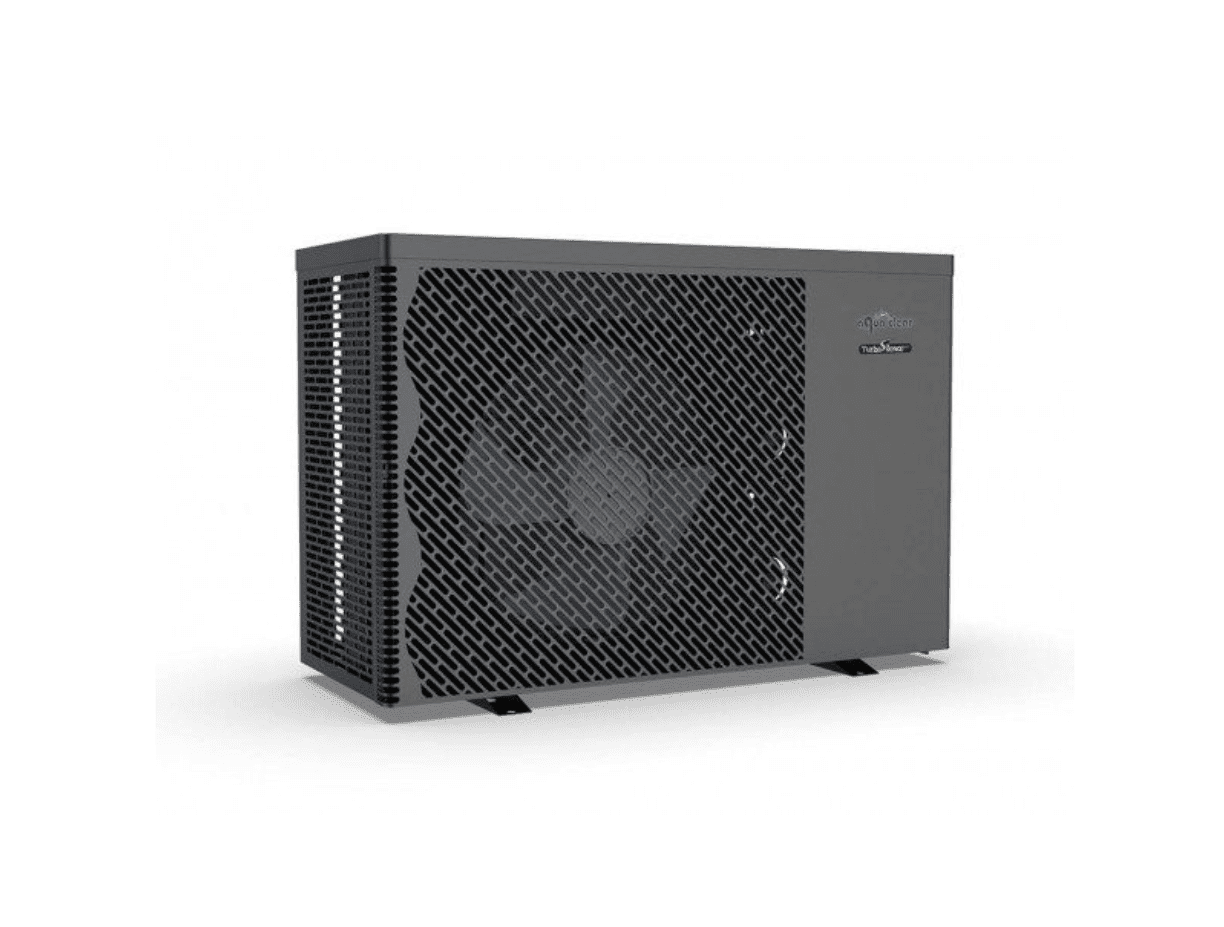
A heat pump doesn't make heat. It moves heat from the outside air into the water. Its efficiency is shown as a COP (coefficient of performance): the units of heat delivered for each unit of electricity used. The higher the COP, the cheaper the heat. Manufacturers quote COP under set test conditions. Real-world COP usually falls as the air gets colder, as the manufacturer figures below show.
An inverter heat pump ramps its compressor and fan up and down to match demand, where an older on/off unit runs at full power or not at all.
That's why steady, part-load running suits it.
Browse the full range: pool heat pumps. Not sure what size you need? Read What size pool heat pump do I need? and Solar pool heating vs heat pump in NZ.
A lot of heat is lost from the water surface, especially overnight. Aqua Clear recommends covering the pool when it's not in use. We don't sell physical covers, so ask your pool shop.
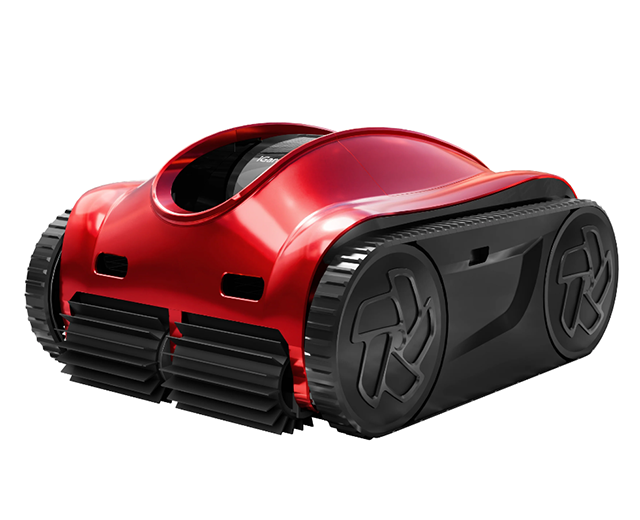
The iGarden K Series and K Plus are cordless, battery-powered robotic cleaners. They clean the floor, walls and waterline, and collect debris in their own top-load filter baskets. See iGarden K Series and iGarden K Plus.
How much does it cost to run a pool pump in NZ? Multiply your pump's kW by the hours it runs, then by your $/kWh rate. A 1.2 kW single-speed pump running 8 hours a day uses 9.6 kWh. At MBIE's national average of 42.1c/kWh (August 2026), that's about $4.04 a day.
Is a variable-speed pump worth it? For most pools, yes. Pump power drops with the cube of speed, so half speed uses about one-eighth of the power. Even running twice as long to move the same water, that's about 25% of the energy.
Can I make my existing pump variable speed? Yes. A variable frequency drive like the AquaX iSaver sits between the power socket and a single-speed pump and slows the pump down. Check with your pool professional or electrician about installation.
What COP should I look for in a pool heat pump? Higher is better, but compare COPs measured under the same test conditions. Look at COP in cooler air and at part load, not just the headline figure. For example, the XP26/X30 manual gives COP at 26°C, 15°C and 7°C air.
Do liquid pool covers work? Lo-Chlor Solar Shield forms an invisible film on the surface that helps reduce evaporation and heat loss. Solar Shield is dosed once every 30 days.
How many hours a day should I run my pool pump? In summer, Aqua Clear recommends running the pump 24 hours a day at low speed, especially when you're heating the pool. Because pump power drops with the cube of speed, slow and steady uses much less power than fast and short. It also keeps the heat pump in its efficient part-load range, puts more water through the filter and improves sanitation. With a chlorinator that senses ORP and pH, the longer hours won't over-chlorinate the pool. In winter, with a multispeed pump, run it 8–12 hours a day.
© 2026 Aqua Clear Products Ltd. All rights reserved. Website design by fuel.